24/7 Emergency Service • Sydney & Perth
+61 0424093612
Bee & Wasp Control Sydney

Safe & Humane Bee & Wasp Removal in Sydney

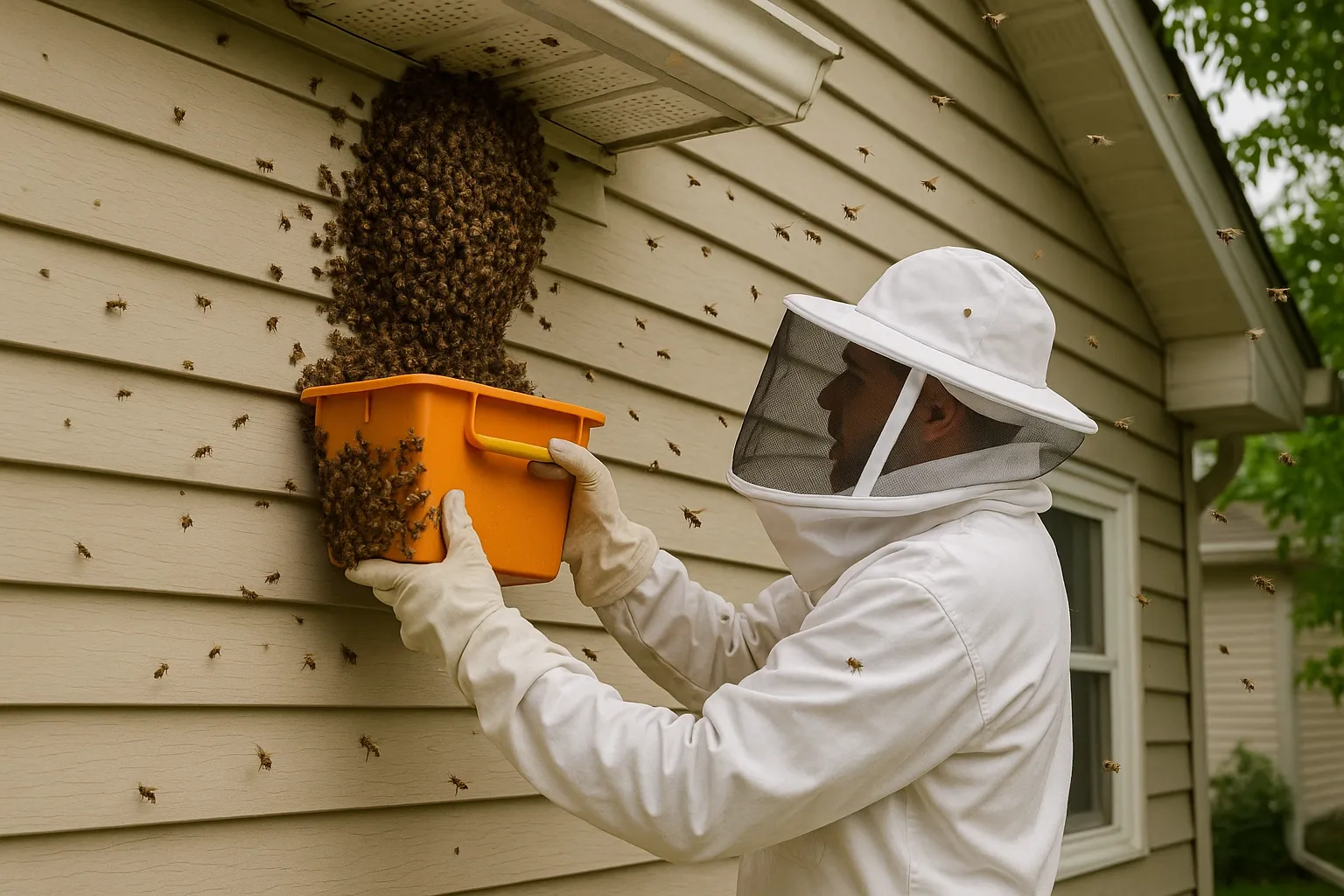
Our licensed technicians provide same-day bee swarm relocation and rapid wasp nest treatments. We protect your home while humanely saving essential pollinators.
⭐ Rated 4.9/5 (327+ Reviews) Licensed NSW EPA Techs
Close-up of a honey bee hive comb inside a brick wall cavity on a Sydney property

Allergy Alert: Active nests near entryways, play areas, or roof vents represent an immediate health hazard. We prioritize Same-Day Emergency Wasp Removal for high-risk situations.

Request Same-Day Removal
Identification Guide

Bee or Wasp? How to Tell the Difference

Identifying the species correctly is critical to determine the risk level, treatment methods, and biosecurity regulations in New South Wales.

Feature Honey Bee (*Apis mellifera*) European Wasp (*Vespula germanica*) Paper Wasp (*Polistes spp.*)
Look Plump, furry, golden-brown/black, ~15mm Smooth, hairless, bright yellow & black bands, 12–17mm Slender, brown/yellow markings, dangling legs, 10–15mm
Nest Waxy comb, built in wall voids, trees, chimneys Grey papery ball, hidden in ground cavities or roof spaces Small open-cell paper combs hanging under eaves/fences
Sting Behaviour Stings only once, then dies Aggressive, stings repeatedly without dying Moderate, stings repeatedly if nest is approached
Primary Risk Wax and honey melt, structural damage, defensive stings Severe multiple stings, anaphylaxis risk, ruins outdoor dining Painful localized stings near doorways or paths

Honey Bees (*Apis mellifera*)

Introduced honey bees swarm in spring to find nesting cavities in wall voids, chimneys, and roof spaces. Because they are vital pollinators, we always prioritize live relocation via local beekeeping networks.

Priority: Live Relocation

European Wasps (*Vespula germanica*)

A highly aggressive, introduced pest in Sydney. Their colonies expand rapidly during summer inside wall cavities, roof voids, and garden beds. They defend their nest aggressively, attacking in swarms.

Priority: Eradication Required

Paper Wasps

Slimmer wasps with dangling legs that construct grey, papery, umbrella-like nests under eaves, gutters, and fence rails. They will sting repeatedly if approached or if gardening work disturbs their nest.

Priority: Nest Treatment

Native Stingless Bees (*Tetragonula*)

Tiny, black, non-stinging native bees (sugarbags). They are completely harmless and construct small hives in tree cavities. They are highly beneficial, protected, and should be left undisturbed.

Status: Protected Pollinator

Mud Dauber Wasps

Solitary, dark metallic blue/black wasps that build mud tubes on masonry and under eaves. They paralyze spiders to stock their larvae chambers. They are docile and rarely sting.
Status: Docile / Non-Aggressive
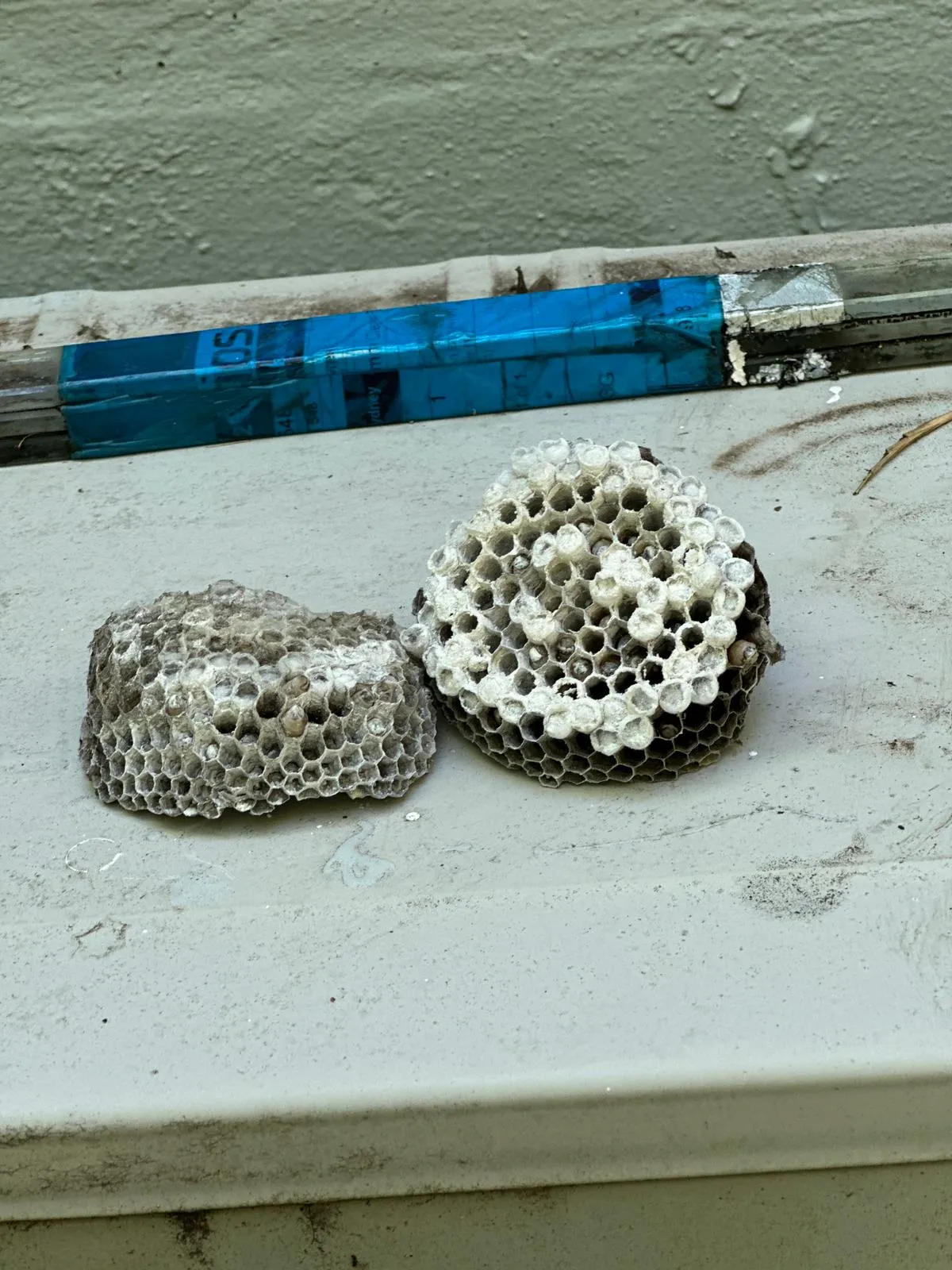
Active paper wasp nest under the eaves of a Sydney home

Sydney Wasp Nest Example

An active paper wasp nest under gutters. Do not approach or attempt to spray these nests without professional safety gear.

Safety First

Why You Shouldn't Attempt DIY Bee or Wasp Nest Removal

Trying to remove a nest with hardware sprays or sealing structural gaps yourself is a leading cause of severe stings and property damage in Sydney.

  • 1

    Defensive Swarm Attacks

    Social wasps and bees release alarm pheromones when threatened. Retail aerosol sprays do not kill the colony instantly, provoking thousands to attack simultaneously.

  • 2

    Anaphylaxis Emergency

    Sting venom can trigger anaphylaxis—a life-threatening allergic reaction causing airways to constrict. Those with known allergies must have an EpiPen ready and avoid nests entirely.

  • 3

    Plasterboard Chewing

    Sealing weep holes or wall entry points traps the pests. They will chew through indoor plasterboard to escape, entering bedrooms and living spaces.
  • 4

    Wax & Honey Melt Damage

    Killing bees but leaving honeycombs inside walls leads to honey melting. This seeps through walls, causing structural rot, mold, and attracting rats and ants.

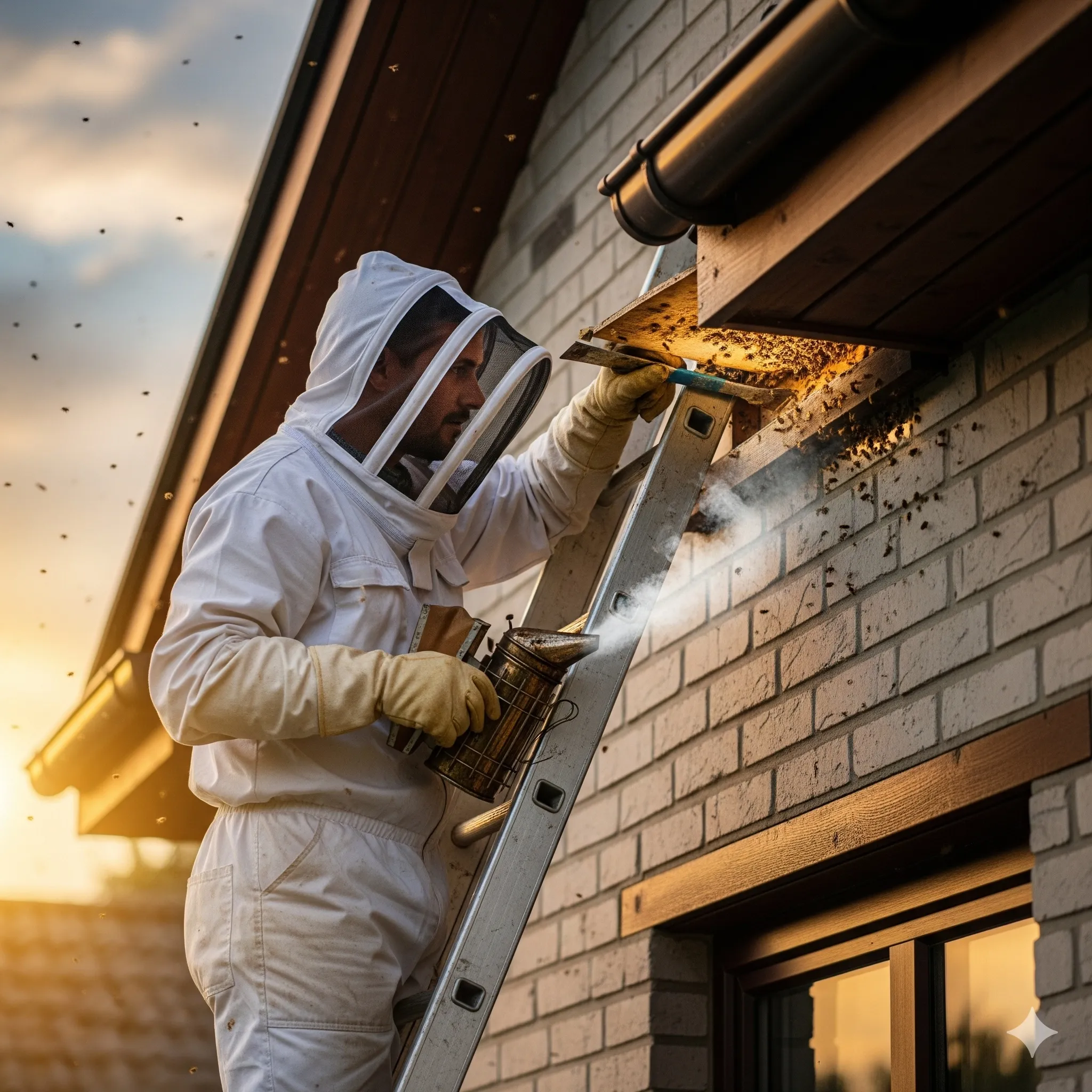
Close-up of a wild honey bee hive hanging under the wooden eaves of a house
Professional suits & equipment are essential EPA Licensed Techs
Structural Hazards

Bees in Wall Cavities & Roof Voids

When honey bees nest inside walls, under roof eaves, or inside chimney flues, the structural risks multiply rapidly. Simply spraying the entry point or trapping the colony does not solve the underlying hazard.

  • Wax & Honey Melt Damage: A mature bee colony (*Apis mellifera*) inside structural voids can contain up to 40 kg of honeycomb. Without live bees constantly fanning and cooling the hive, the wax combs will melt in Sydney's heat. Honey will seep through plasterboard, causing permanent brown stains, paint peeling, and ceiling failure.
  • Secondary Pest Invasions: Fermenting honey and raw wax are strong attractants for other local pests. Homes with untreated dead hives frequently suffer subsequent infestations of rodents (rats and mice), ants (sugar ants), cockroaches, and small hive beetles.
  • Timber Rot & Decay: Raw honey absorbs moisture from the atmosphere. Saturating wood framework creates a breeding ground for wood-decay fungi, causing dry rot and weakening structural building supports.

Professional Cavity Proofing

We don't just extract the colony; we clean the cavity and seal access points. We install durable stainless steel mesh weep-hole covers and copper mesh in expansion joints to block future scouts without restricting sub-floor ventilation.

Biosecurity Compliance

NSW DPI Biosecurity & Sydney Varroa Mite Zones

The introduction of the invasive mite Varroa destructor has fundamentally changed beekeeping and pest management in New South Wales. In Sydney, all honey bee swarm captures and relocations are strictly monitored.

  • NSW Department of Primary Industries (DPI) Regulations: Under the Biosecurity Act 2015, strict quarantine regulations govern the transit of European honey bees (*Apis mellifera*). Moving colonies, combs, or gear across zone borders without authorization is illegal.
  • Permit-Compliant Relocations: Xpress Pest Control aligns strictly with NSW DPI quarantine guidelines. We coordinate exclusively with registered beekeepers (apiarists) holding active transit permits to guarantee that live swarms are relocated legally and responsibly.
  • Varroa Mitigation Measures: If a hive is found inside a biosecurity eradication zone, direct relocation may be legally restricted. In these circumstances, we deploy biosecurity-approved, safe containment protocols to eliminate the threat of mite spread.

Native Bee Exemption

Sydney's tiny native stingless bees (*Tetragonula carbonaria*) do not host Varroa mites and are not subject to quarantine transit restrictions. We prioritize protecting and preserving native hives, referring relocations to specialists.

Safety-First Method

Our Bee & Wasp Removal Process: A 5-Step System

We deploy a safe, thorough, and biosecurity-compliant process to protect your family and property.

1

Inspection & ID

We locate the nest core, track entry pathways, identify the exact species, and assess safe access points.

2

Safe Strategy

We select live apiary extraction for honey bees or target-specific APVMA-approved low-toxicity dust treatments for wasps.

3

Dusk Execution

We treat aggressive nests at dusk when the colony is calm. Techs wear heavy-duty full protective mesh gear.

4

Nest Extraction

Once treated, we physically remove the wasp nests or wax combs from chimneys, eaves, and cavities to prevent other pests.

5

Proofing & Sealing

We wash away pheromones and seal gaps/weep holes using stainless steel mesh to block future scouting swarms.

Bee-Friendly Relocation vs. Wasp Treatment

Honey bees are protected pollinators critical to our ecosystem. In NSW, managed apiaries are regulated by the NSW Department of Primary Industries (DPI) to manage biosecurity threats like the Varroa mite.

Our primary strategy for honey bees is always **live relocation** via licensed local apiarists. Extermination is strictly a last resort if a hive is completely inaccessible and poses a direct medical threat.

Conversely, introduced European wasps are invasive pests under the Biosecurity Act. They damage local native wildlife and pose severe safety hazards, requiring total eradication and nest removal.

Our Environmental Commitment

  • Partnering with registered Sydney apiarists
  • Live comb extraction from accessible brick walls
  • Relocation outside biosecurity quarantine zones
  • Preservation of native stingless bee hives
Pricing Guide

What Does Bee & Wasp Removal Cost in Sydney?

We provide clear, fixed upfront pricing ranges based on species and location difficulty.

Paper Wasps

Eaves & Gardens

Treatment of small, visible paper wasp nests hanging under gutters, eaves, or low shrubs.

From $120
Price confirmed before work
European Wasps

Roof & Ground Voids

Dusting and eradication of active European wasp nests hidden underground or inside attic rafters.

From $180
Full protective gear included
Bee Swarms

Exposed Clusters

Quick retrieval and collection of temporary honey bee swarms clustered on fences or trees.

From $150
Transferred to local apiarist
Established Bees

Structural Voids

Extraction of mature combs inside brick walls or chimneys, including cleanup and proofing.

From $350
Firm custom quotes provided

Stung? Immediate First-Aid & Emergency Response

Know the difference between localized stings and life-threatening reactions.

Bee Stings

  • 1. Scrape Stinger: Scrape stinger out sideways with a fingernail or credit card immediately. Do not squeeze.
  • 2. Wash: Clean the area with soap and water to avoid infection.
  • 3. Cold Pack: Apply a wrapped ice compress for 10 minutes to reduce localized swelling.

Wasp Stings

  • 1. Clean Immediately: Wasps do not leave their stingers behind. Wash with soap.
  • 2. Manage Pain: Apply a cold compress wrap. Monitor the patient, as wasps can sting repeatedly.
  • 3. Watch Patient: Monitor for any spreading rash, difficulty breathing, or dizziness.

Anaphylaxis (Call 000)

A severe allergic reaction is a medical emergency. Watch for: trouble breathing, face/throat swelling, dizziness, or a spreading rash.

Call 000 immediately and administer an EpiPen (adrenaline auto-injector) if available.

Sydney Seasonal Nesting & Suburbs We Service

Sydney’s humid coastal climate creates high bee and wasp pressures. Swarms peak during spring (September–November) and mature wasp nests grow largest over summer (December–February).

We provide licensed same-day inspections and treatments for residential homes, strata properties, schools, cafes, and childcare centres right across Sydney.

Inner West Eastern Suburbs North Shore Northern Beaches Hills District Western Sydney Sutherland Shire Parramatta Sydney CBD

Suburb-Level Expertise

From terrace wall cavities in Balmain and Newtown to wide residential eaves in Castle Hill, our local teams understand how Sydney homes are built and where bees and wasps seek entry.

Check Suburb Availability

Why Choose Xpress Pest Control?

Licensed, accredited, and committed to humane bee-friendly relocation and rapid wasp eradication.

Licensed Techs

Technicians hold NSW EPA pesticide licences and timber pest accreditation.

Humane & Ethical

We prioritize the live relocation of honey bees to registered apiaries outside quarantine zones.

Guaranteed Work

We provide a written service warranty on our entry-sealing and proofing treatments.

Same-Day Slots

Same-day local response is available across all Sydney sub-regions for emergencies.

Need a Bee Swarm or Wasp Nest Removed Safely?

Speak with our expert Sydney team or request a fixed upfront quote online. We provide licensed pest control and humane live bee relocations.

24/7 Sydney Hotline
0424 093 612
Instant Mobile Chat
WhatsApp Support Available

Our Services Cover

  • Live Bee Relocations: extraction from cavities and safe transport to local managed apiaries.
  • Wasp Nest Treatments: targeted dusting of ground vents, eave clusters, and attics.
  • Property Proofing: weep hole sealing and cavity mesh installations.
  • Stamping Out Strata Risks: full compliance reports for dining gardens and schools.

Customer reviews

What Sydney Locals Say About Our Bee & Wasp Services

Real feedback from Sydney homeowners, strata managers, and businesses who booked our safe bee relocations and emergency wasp treatments.

Rated 5 out of 5 stars

“Had a huge European wasp nest in our wall cavity in Randwick. Xpress Pest Control treated it same-day and sealed the brick weep holes. Professional, clean, and extremely fast.”

Amelia R.

Homeowner • Randwick, Sydney

Rated 5 out of 5 stars

“Found a honey bee swarm in our Chatswood garden tree. They coordinated with a local beekeeper who relocated the hive safely. Amazing eco-friendly service and highly recommended!”

Priya S.

Tenant • Chatswood, Sydney

Rated 5 out of 5 stars

“Our strata complex in Balmain had paper wasps nesting right next to the main building entryway. Called Xpress and a technician treated the nest at dusk. Safe, quick, and compliant.”

Marcus G.

Strata Manager • Balmain, Sydney

Help centre

Frequently Asked Questions: Bee & Wasp Removal

Get clear answers on biosecurity, pricing, safety, and aftercare. If you have any other concerns, ask our Sydney team.

What's the difference between a bee and a wasp?

Bees are furry, round, golden-brown/black, and sting only once before dying. Wasps are smooth, hairless, bright yellow and black, and can sting repeatedly. Bees construct waxy honeycombs, whereas wasps build grey papery nests.

Are bees protected in New South Wales?

No, introduced honey bees are not legally protected in NSW. However, because they are vital pollinators, professional pest controllers prioritize live relocation rather than eradication. Native stingless bees are protected and should never be harmed.

Can I spray a wasp nest myself?

No. DIY spraying is highly dangerous. Standard aerosol sprays do not penetrate the nest core, agitate the colony, and provoke defensive swarms. Sealing the entry point forces wasps to chew through plasterboard into your home.

How much does professional bee or wasp removal cost in Sydney?

Wasp treatments start from $120 for basic, accessible paper wasp nests. European wasp nests or roof void treatments generally cost between $180 and $320, depending on height and accessibility. Structural hive extractions from wall cavities start from $350.

Do you offer same-day emergency removals?

Yes. We prioritize same-day callouts across Sydney for nests located near doors, pathways, schools, childcare centres, or homes with known allergy sufferers.

Do you kill the bees or relocate them?

We prioritize live relocation to registered local apiarists for accessible honey bee colonies. Wasps are treated and eradicated to protect the community.

Are your treatments safe for pets and children?

Yes. We use APVMA-approved, low-toxicity products applied in targeted areas as part of Integrated Pest Management. They are safe for children and pets once completely dry.

What areas of Sydney do you service?

We cover the Inner West, Eastern Suburbs, North Shore, Northern Beaches, Hills District, Western Sydney, Parramatta, Sutherland Shire, and CBD.

What should I do if a bee swarm lands in my garden?

Keep children and pets inside and monitor the swarm from a safe distance. Swarms are temporary (resting for 24–48 hours while scouts find a site). Call us immediately to arrange collection before they move into your walls.

When are wasps most active in Sydney?

Wasp activity in Sydney peaks from early spring (September) through late autumn (May). Nests expand rapidly over the hot summer months, and colonies become highly aggressive as food resources dwindle in autumn.